

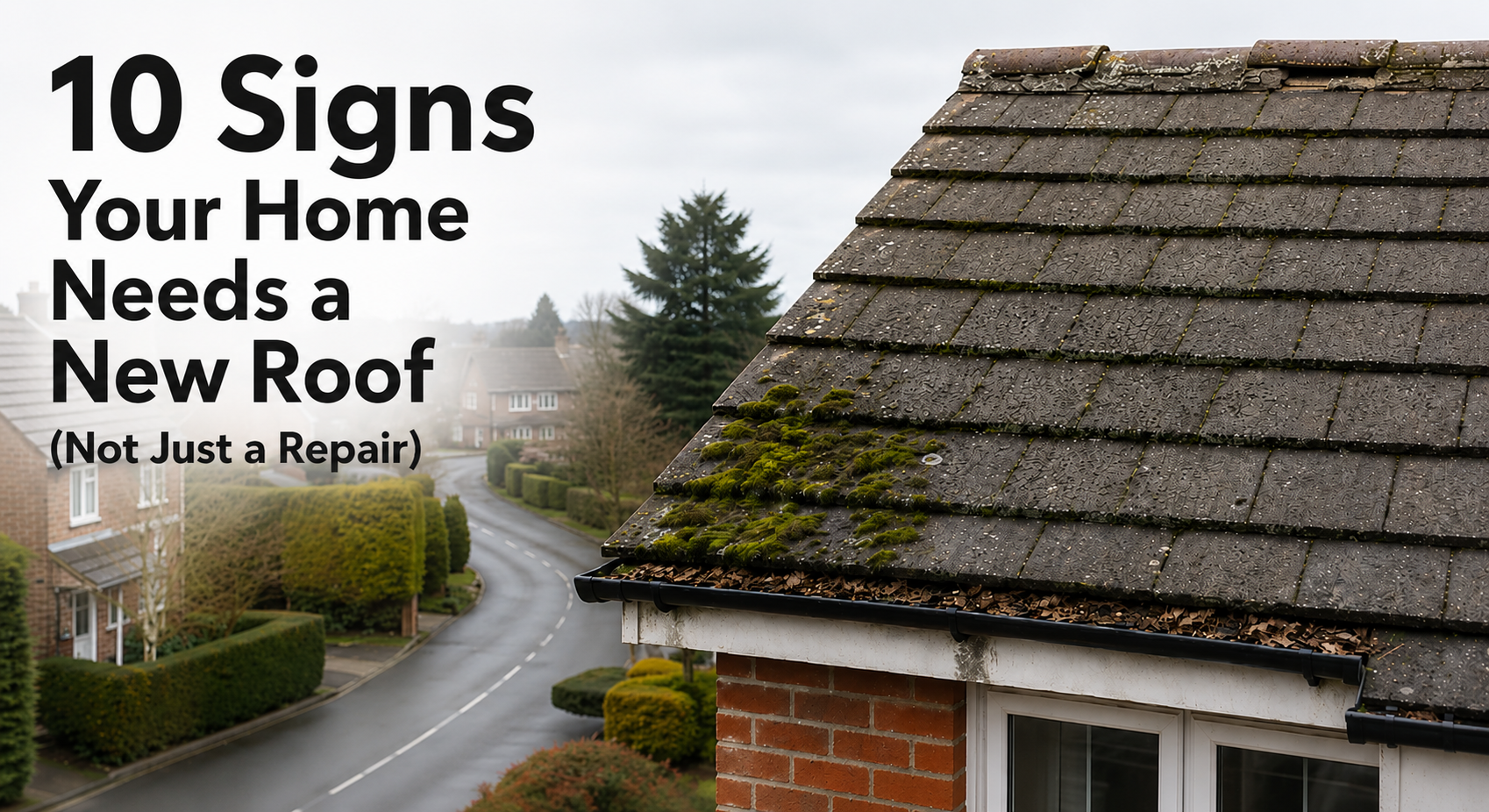
10 Signs Your Home Needs a New Roof (Not Just a Repair)
Why Getting This Decision Right Matters
Homeowners are often tempted to keep repairing an ageing roof rather than replace it, because the upfront cost of replacement feels significant. This is understandable, but it can be a false economy. When a roof is beyond a certain point, repairs become increasingly frequent and expensive, and they do not address the underlying structural and material issues driving the problems.
The rough rule used by experienced roofers is this: if repairs have cost you more than 25 to 30 percent of a replacement roof’s value over the past few years, or if you are calling a roofer out more than once a year to address new problems, the economics have already shifted in favour of replacement.
Understanding the signs below helps you make that judgment from a position of knowledge rather than guesswork.
Sign 1: Your Roof Is More Than 25 to 30 Years Old
Age is the single most reliable predictor of a roof’s need for replacement. The lifespan of a roof depends on its material, but concrete interlocking tiles, which cover the majority of Surrey homes built in the last 60 years, typically last between 30 and 50 years.
If your roof is approaching or has passed 30 years old, it does not necessarily need replacing right now, but it does need a professional assessment. At this age, the felt underlayment beneath the tiles is likely to be original and may have failed or be failing. The battens may be undersized by modern standards. The mortar bedding on the ridge and hips will be showing deterioration.
Even if individual tiles still look sound, the supporting structure beneath them may be near the end of its serviceable life. An inspection by a qualified roofer will tell you whether you are looking at a few more years of managed maintenance or whether replacement now would save you money in the medium term.
Sign 2: You Can See Daylight in Your Loft
Go into your loft on a bright day and switch off any artificial lighting. If you can see pinpoints or patches of daylight coming through the roof structure above you, your roof covering has failed somewhere.
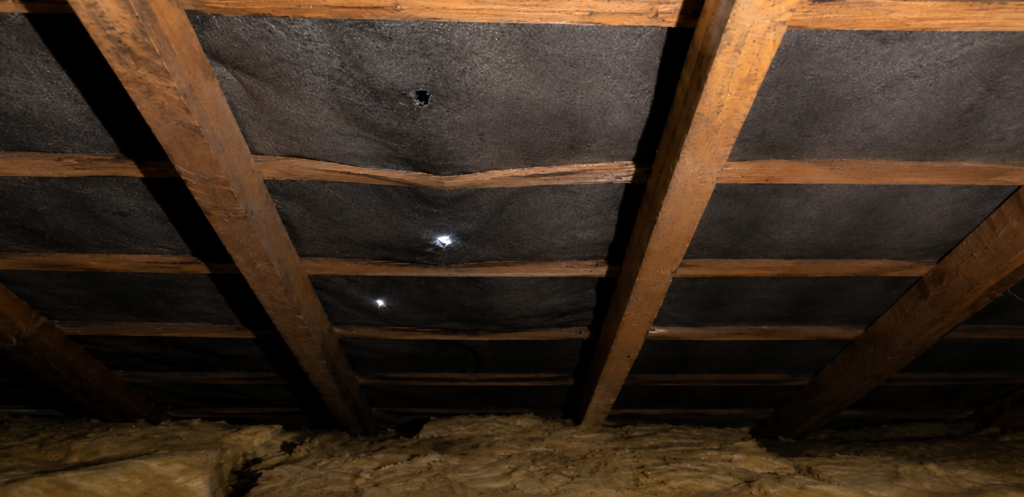
Small amounts of daylight at the very edges of the roof near the eaves can sometimes indicate minor gaps rather than full failure, but any daylight visible across the main body of the roof slope is a serious warning sign. Where daylight gets through, rain gets through. Where rain gets through, timber decay follows.
This is one of the clearest indicators that repair alone is unlikely to solve the underlying problem. Multiple points of light suggest widespread felt or tile failure rather than an isolated fault, and that pattern points toward replacement.
Sign 3: Widespread Damp Staining in Your Loft or on Top-Floor Ceilings
Water staining in a loft or on the top-floor ceilings of a property is visible evidence that water has been penetrating the roof covering. A single stain in a specific location might indicate a localised fault: a slipped tile, a failed flashing, or a cracked piece of ridge pointing. That can often be repaired.
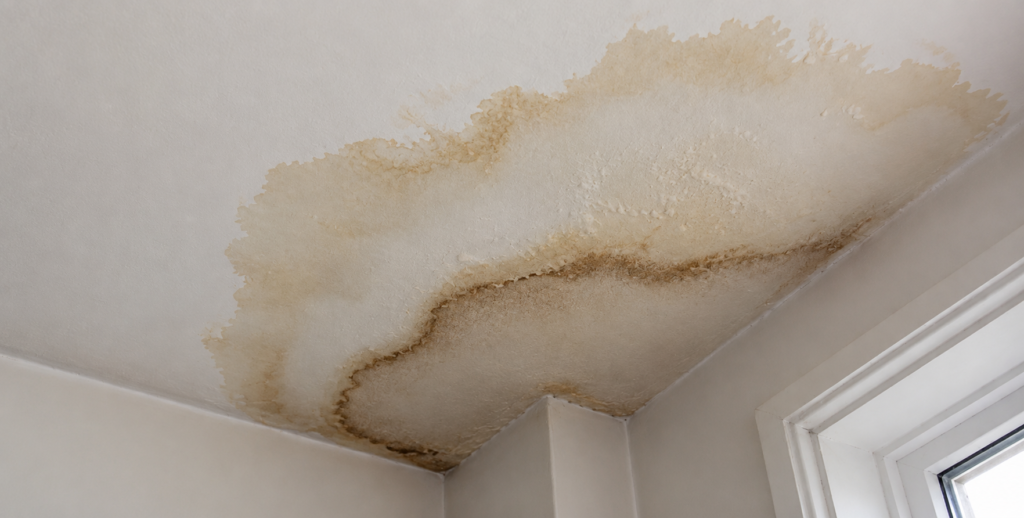
Multiple damp patches across different areas, recurring stains that keep appearing after apparent repairs, or staining that has spread significantly over recent years all suggest a more systemic problem. When water is finding its way through at multiple points, the roof covering as a whole has lost its integrity.
Check your loft after periods of heavy rain or after the first freeze-thaw cycle of winter. Fresh staining on the rafters or the underside of the felt is more informative than old, dried stains. Look particularly at the areas around chimney stacks, valleys, and the ridge, as these are the most common entry points.
Sign 4: The Ridge or Hip Tiles Are Cracking and Falling
The ridge runs along the apex of a pitched roof. Hip tiles run up the external angles of a hipped roof. Both are traditionally bedded in mortar, and that mortar has a finite lifespan, typically 15 to 25 years before it begins to crack, loosen, and allow the tiles to shift.
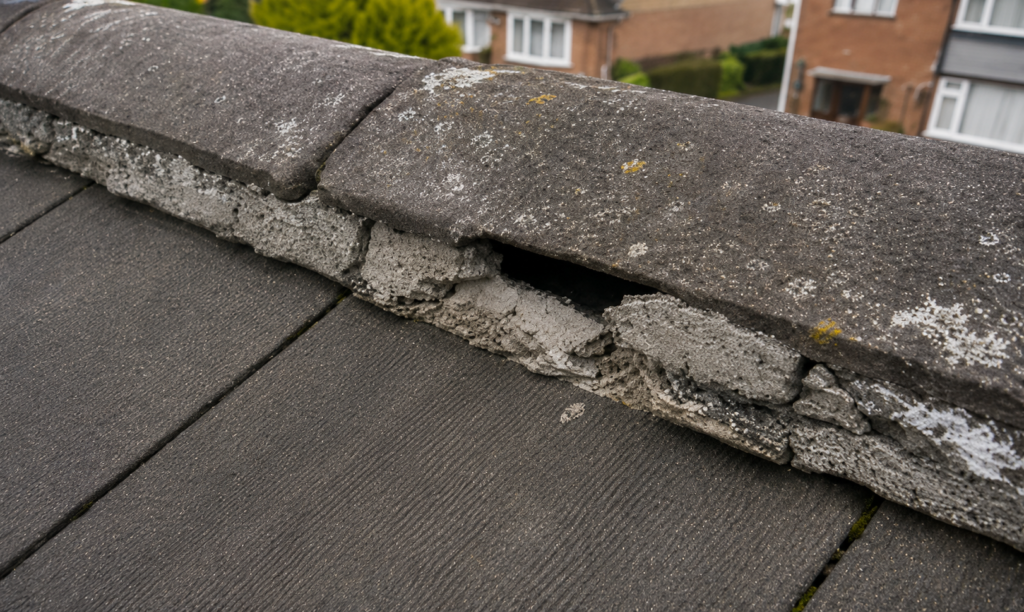
Isolated cracked pointing at the ridge is a repair job. Ridge tiles that are visibly loose, rocking, or falling can be repointed or rebedded, and if the rest of the roof is in reasonable condition, this is worth doing.
However, if the ridge mortar has failed along most of its length, if hip tiles are regularly coming loose across the whole roof, and if this is happening repeatedly despite previous repairs, it is a sign that the roof as a whole is at the point where investment in partial repairs no longer makes sense. Dry ridge systems, which replace mortar with mechanical fixings, are the modern solution and form part of a full reroof specification.
Sign 5: Sagging or Uneven Roof Surfaces
Stand at a distance from your property and look along the roof slope. The surface should be flat and regular with straight, even courses of tiles. Any visible sagging, waves, or depressions in the surface are a warning sign that should not be ignored.
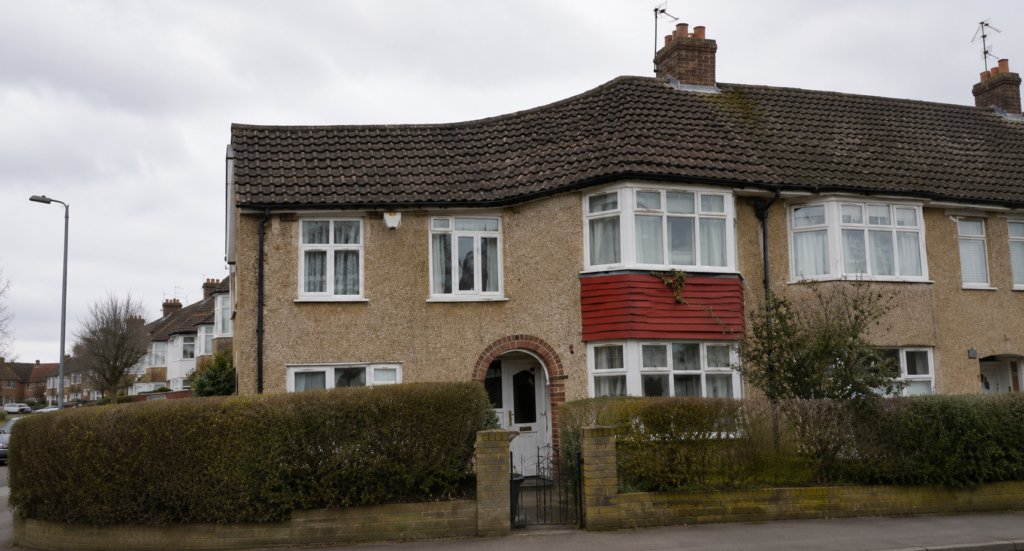
Sagging can have several causes:
Failed or rotten battens: If the timber battens have rotted, the tiles will settle into irregular positions as the batten loses its shape. This is a common finding on older roofs where untreated timber was used.
Rotten or damaged rafters: If individual rafters have rotted or cracked, the roof surface above them will sag between the sound timbers. This is a structural issue and not addressable by replacing the surface covering alone.
Spreader failure: In older properties, the roof structure may rely on ceiling joists to prevent the roof from spreading outward. If these have failed, the whole roof can begin to spread and sag.
A sagging roof needs an immediate structural assessment, not just a survey of the tile covering. In some cases, the structural issues can be addressed and a new covering installed. In others, more extensive works are required. Either way, this is not a problem to defer.
Sign 6: More Than 20 to 30 Percent of Your Tiles Are Cracked, Missing, or Porous
Individual cracked or missing tiles are normal across the life of any roof and are a standard maintenance task. The threshold that matters is when the proportion of damaged or failing tiles crosses into territory that makes the remaining covering as a whole unreliable.
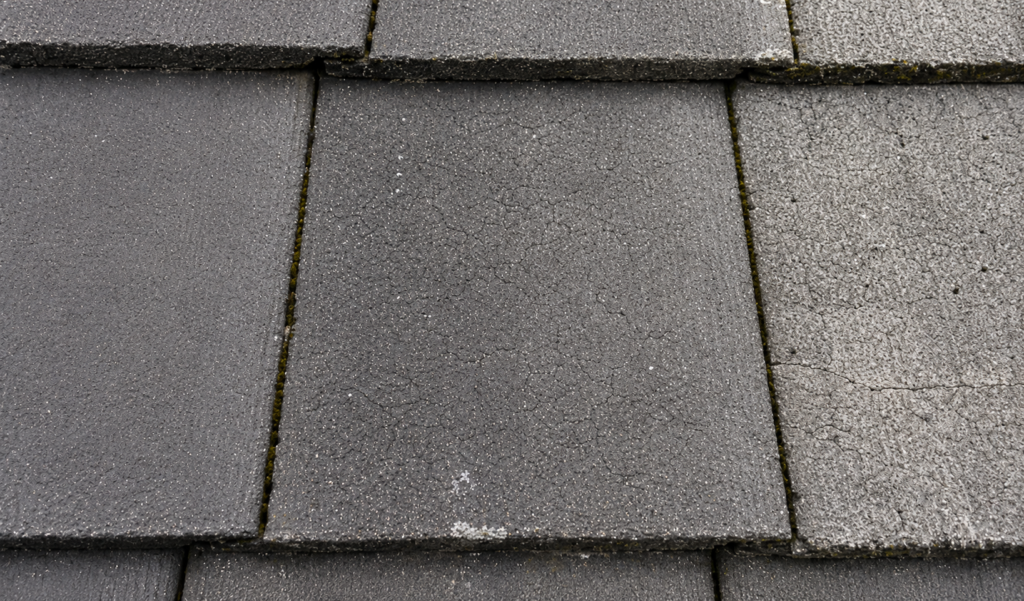
Once 20 to 30 percent of a roof’s tiles are affected, the pattern of damage usually reflects widespread failure of the material rather than isolated incidents. Porous tiles (those that have lost their surface density and absorb water) are particularly problematic because they are not always obviously damaged from the ground, yet they are actively allowing water into the structure.
A roofer assessing this will look at the overall condition of the tile surface, test a sample of tiles for porosity, and assess whether the pattern of failure suggests localised problems or general deterioration. If the verdict is general deterioration, replacement is the appropriate response.
Sign 7: The Felt Underlayment Has Failed
The felt underlayment sits beneath the tiles and above the rafters. It provides a secondary line of defence against wind-driven rain and condensation, directing any water that gets through the tile covering safely to the gutters.
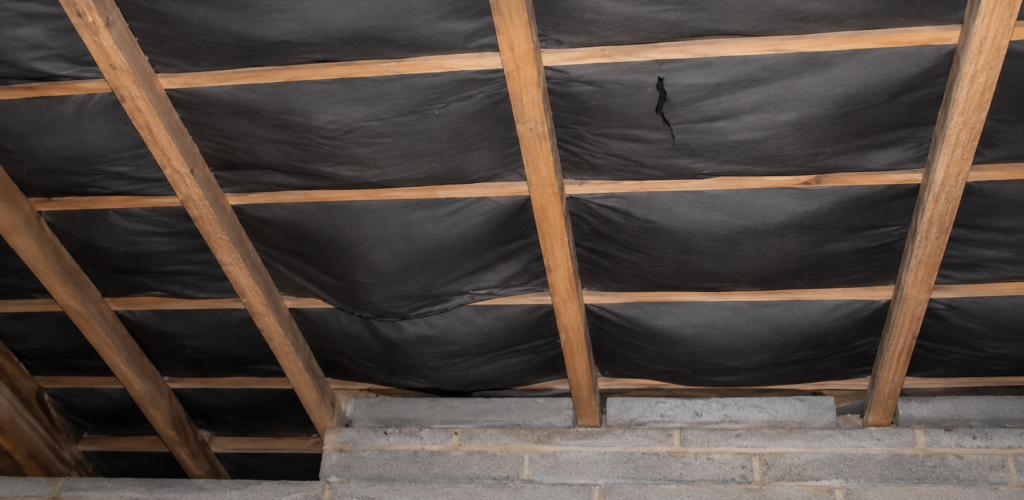
Traditional bitumen felt, found on most roofs installed before the 2000s, has a lifespan of 15 to 25 years. Beyond that, it becomes brittle, cracks along fold lines and nail points, and loses its waterproofing ability.
You can see the underside of the felt from inside your loft. Signs of failure include:
- The felt sagging heavily between the battens, indicating it has absorbed water and lost its tension.
- Visible holes, tears, or cracks in the felt surface.
- Areas where the felt has separated from the battens and is hanging loose.
- Staining directly on the top surface of the rafters beneath where the felt has allowed water through.
Failed underlayment is not repairable without stripping the tiles, which effectively means a full reroof. If the underlayment has failed, the new roof should incorporate a modern breathable membrane rather than a replacement bitumen felt. A full roof installation will address the underlayment, battens, and covering as a single properly specified package.
Sign 8: Your Energy Bills Have Increased and the Loft Is Unusually Cold or Draughty
A well-functioning roof should not be a significant source of heat loss. If your top floor rooms have become noticeably harder to heat, if you can feel draughts in the loft, or if your energy bills have increased without an obvious explanation, your roof may be a contributing factor.
Failed underlayment allows cold air to circulate freely in the roof space. Damaged or porous tiles increase moisture levels, which degrades insulation. Gaps in the mortar at the ridge allow wind to drive directly into the roof structure.
This does not automatically mean replacement is required, but it does mean your roof needs a thorough inspection to understand what is happening and why.
Sign 9: The Flashings Are Failing Repeatedly
Flashings are the metal components that seal the junctions between your roof and chimneys, parapet walls, dormer cheeks, and where a lean-to or extension abuts the main house. Lead flashing systems are the standard material in the UK and the most durable option.
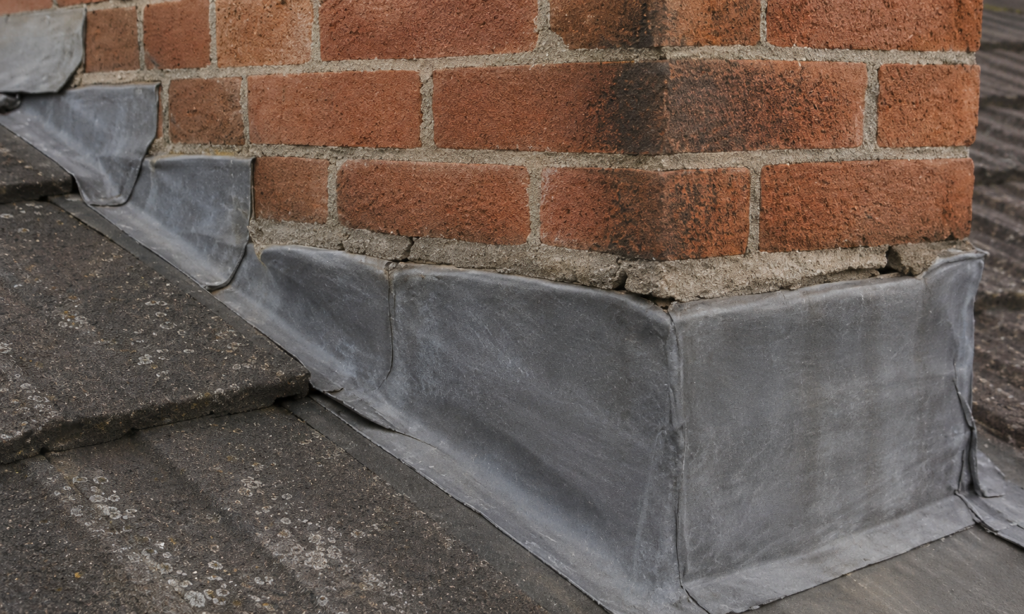
Flashings that are correctly installed and properly weighted or pointed should last 50 years or more. Flashings that are failing regularly, despite being repaired, suggest a systemic problem: either the original lead was too thin, the fixing method is wrong for the movement occurring in the structure, or the junctions were never properly detailed.
If you are repeatedly calling a roofer to repoint or reseal flashings that were recently repaired, this is a sign that the overall roof is in decline. Flashings are properly addressed as part of a full reroof, at which point they can be stripped and replaced with correctly specified lead rather than patched indefinitely.
Sign 10: Moss, Lichen, and Algae Are Causing Structural Damage
Moss on a roof is extremely common in the UK and does not automatically indicate a problem. Moss growth is partly a cosmetic issue and partly a practical one. The concern is not the moss itself but what it does over time.
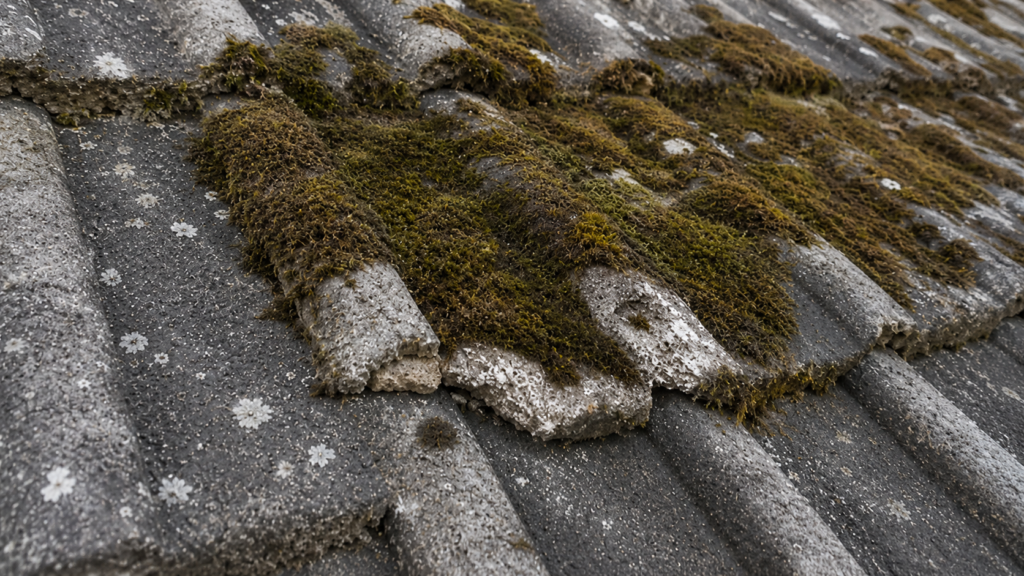
As moss accumulates, it retains moisture against the tile surface. In winter, this moisture freezes and expands, gradually forcing the surface of the tile apart. This process, known as spalling or freeze-thaw erosion, is what turns a moss-covered roof from a cosmetic issue into a structural one.
Thick, established moss growth on tiles that show signs of surface erosion underneath it, tiles that have begun to spall or break up along their edges, or widespread algae growth that has stained and degraded the tile surface all indicate that the covering has moved beyond the point where cleaning will restore it to a reliable state.
On an otherwise sound roof, professional moss treatment and clearance is appropriate maintenance. On a roof that already has other warning signs from this list, moss growth is a further indicator that the covering has reached the end of its useful life.
What to Do If You See These Signs
If your roof shows one of these signs in isolation, the appropriate first step is to have a qualified roofer carry out an inspection. Many problems caught early are entirely manageable as repairs.
If your roof shows several of these signs simultaneously, or if isolated problems have been recurring despite previous repairs, the honest assessment is almost certainly that replacement will save you money compared to continuing to repair. A reputable roofer will tell you this even when it involves a larger project than a simple repair.
Questions to Ask Your Roofer During an Inspection
- What is the current condition of the underlayment?
- What proportion of the tiles are porous, cracked, or failing?
- Are there any structural timber concerns?
- What is your assessment: repair or replace?
- If repair: how long would you expect those repairs to last given the overall condition of the roof?
- If replace: what specification would you recommend and why?
A contractor who answers these questions clearly and honestly, who does not push you toward the most expensive option without justification, and who puts their assessment in writing is one worth trusting.
Frequently Asked Questions
How quickly can a roof go from needing repair to needing full replacement?
It depends on the material and the nature of the fault. A single slipped tile or failed flashing addressed promptly can add years to an otherwise sound roof. A failed underlayment or widespread tile porosity, left unaddressed, can lead to timber decay within a single winter. The sooner you act on warning signs, the more options you have. Roof repair services are most cost-effective when the damage is still localised.
Is it worth repairing a roof if I am planning to sell?
Almost always yes. Roof condition is one of the most scrutinised items in a homebuyer survey, and a visibly failing roof will either reduce your sale price or give buyers grounds to renegotiate. A report from the HomeOwners Alliance found that structural and roof defects are among the most common reasons sales fall through after survey. Even a documented recent repair is reassuring to buyers.
Can a roofer tell me if I need a new roof without coming onto the roof itself?
A ground-level inspection gives a reasonable first impression, but a meaningful assessment requires access to the roof surface and, critically, to the loft interior. The condition of the underlayment, the battens, and the rafters cannot be assessed from the ground. Always request an inspection that includes a loft survey.
What is the difference between a repair and a reroof?
A repair addresses a specific fault: a slipped tile, a failed flashing, a cracked ridge tile. A reroof strips the covering completely and replaces the underlayment, battens, and tile covering across the whole roof. A reroof also allows any structural timber issues to be identified and addressed. If your roof has multiple simultaneous faults, a reroof is typically more cost-effective than repeated individual repairs. The roof maintenance services page explains what a planned maintenance programme looks like for roofs that are not yet at replacement stage.
How long does a full roof replacement take?
For a standard Surrey semi-detached or detached property, a full pitched roof replacement typically takes three to five working days depending on size, complexity, and weather. Flat roof replacements on extensions or garages are generally completed in one to two days.
The Bottom Line
Most roofs do not fail catastrophically. They decline gradually over years, giving you time to make a considered decision rather than an emergency one. The homeowners who get the best outcome are those who stay on top of the warning signs, get inspections when they notice something changing, and act before a manageable replacement becomes an emergency repair that costs more and causes more disruption.
If you have seen any of the signs described in this article, or if your roof is more than 20 years old and has not been professionally inspected recently, now is the time to get it looked at properly.