

How Long Does a Roof Last? Lifespans of Every Roofing Material Explained
Why Lifespan Matters When Choosing Roofing Materials
The cost of a roof is not just what you pay on the day of installation. It is the total cost across the years you own the property, including maintenance, repairs, and eventual replacement. A cheaper material with a 15-year lifespan may well cost more in the long run than a more expensive material that lasts 50 years without significant maintenance.
Understanding lifespan also helps you plan. If you know your current roof covering was installed 25 years ago and the material you are looking at has a 30-year lifespan, you are probably a few years away from needing decisions rather than a decade away.
Pitched Roof Materials
Concrete Interlocking Tiles
Expected lifespan: 30 to 50 years
Concrete interlocking tiles are the most common roofing material on UK residential properties. They are affordable, widely available, easy to replace individually, and capable of coping well with the UK’s variable weather. Most Surrey homes built or reroofed between the 1960s and the 2000s will have concrete tiles.
The lifespan of concrete tiles varies considerably with the quality of the original manufacture. High-quality tiles from reputable manufacturers (Marley, Redland, Sandtoft) at the upper end will regularly achieve 50 years. Lower-quality tiles, particularly those from the 1970s, can become porous and spalling within 20 to 25 years.
What shortens the lifespan: Poor quality original manufacture, sustained moss growth that causes the tile surface to erode, freeze-thaw cycling in exposed northern-facing pitches, inadequate fixings that allow tiles to slip over time.
What extends the lifespan: Quality tiles with a good factory finish, regular clearing of moss and lichen, prompt replacement of individual damaged tiles before the problem spreads.
Signs of end of life: Widespread crazing or surface erosion making the tiles porous, systematic slippage across multiple courses, friable tile edges that crumble when handled.
Clay Plain Tiles
Expected lifespan: 50 to 70 years
Clay plain tiles are the traditional covering for pitched roofs across much of South East England and are common on Victorian and Edwardian properties throughout Surrey. They are denser and harder-wearing than concrete and, if originally fired at high temperature, have excellent resistance to water absorption.
Good quality handmade clay tiles have been known to last 100 years or more. Mass-produced machine-made clay tiles from the mid-20th century are less durable but still significantly outlast most concrete alternatives.
What shortens the lifespan: Delamination in lower-quality tiles, particularly those from the post-war period; failure of the lime mortar bedding on ridge and hip tiles; mechanical damage from storm debris or foot traffic.
What extends the lifespan: High-quality kiln-fired manufacture, good ventilation beneath the tile to prevent condensation and frost damage, regular inspection of mortar bedding at ridges and hips.
Signs of end of life: Widespread delamination where tiles split into layers, tiles that sound hollow when tapped indicating internal cracking, systematic mortar failure at ridges and hips.
Natural Slate (Welsh or Spanish)
Expected lifespan: 80 to 100 years or more
Natural slate is the premium option for pitched roofing in the UK. Welsh slate, in particular, is among the most durable roofing materials available anywhere, with documented examples of roofs remaining watertight after more than a century.
Spanish slate is less dense than Welsh slate and typically carries a somewhat shorter lifespan, around 60 to 80 years for good quality material, though this is still significantly longer than most alternatives.
Natural slate is the required or preferred material in conservation areas and on listed buildings across Surrey and the wider South East, and for good reason: it looks beautiful, it lasts, and when eventually replaced, the individual slates can sometimes be salvaged and relaid.

What shortens the lifespan: Poor-quality nail fixings that corrode before the slate itself fails (a phenomenon known as nail sickness, where the nails rust through while the slates themselves remain sound); inadequate lap resulting in wind-driven rain penetrating between the slates; delaminating slate from quarries producing lower-grade material.
What extends the lifespan: High-quality nail fixings, appropriate head and side laps for the local exposure category, professional inspection every 15 to 20 years to check for nail sickness.
Signs of end of life: Widespread nail sickness causing multiple slates to slip simultaneously, delaminating slates that have lost their surface cohesion, irreparable damage to a significant proportion of the slate covering.
Fibre Cement Slate
Expected lifespan: 30 to 50 years
Fibre cement slate is a manufactured alternative to natural slate, designed to mimic its appearance at a lower cost. The better products on the market are genuinely attractive and weather well. They are an appropriate choice for new builds or reroofs where natural slate would be prohibitively expensive or is not required by planning conditions.
Earlier fibre cement products from the mid-20th century often contained asbestos. These should never be disturbed without professional assessment and proper containment procedures.
What shortens the lifespan: Cheaper products with inadequate surface finish that absorb water over time, incorrect installation with insufficient lap, mechanical damage from impact.
What extends the lifespan: Premium products from established manufacturers, professional installation with correct fixings and laps, regular clearing of moss growth.
Concrete Pantiles and Traditional Profiles
Expected lifespan: 30 to 50 years
Pantiles and traditional profiles such as Roman tiles are variations on the standard concrete tile with different shapes and profiles. Their lifespan characteristics are broadly similar to those of interlocking concrete tiles, and the same factors affect their longevity.
Flat Roof Materials
EPDM Rubber Membrane
Expected lifespan: 25 to 50 years
EPDM (ethylene propylene diene monomer) is the dominant flat roofing material on new residential installations in the UK today. It replaced traditional felt as the standard choice because of its significantly longer lifespan, excellent resistance to UV degradation, and low maintenance requirements.
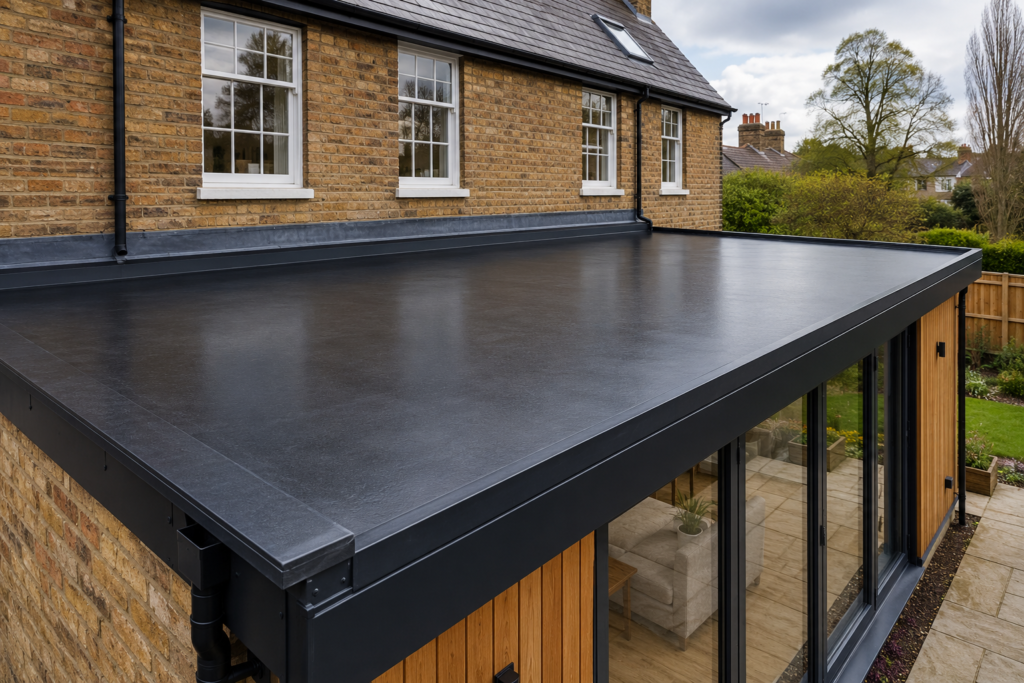
A correctly installed EPDM flat roof can genuinely reach 50 years without significant issues. The material is flexible, copes well with thermal expansion and contraction, and does not crack or become brittle in cold weather. Seams and perimeters are the most vulnerable areas, and these should be checked periodically.
If you are considering a flat roof for an extension or garage in Surrey, the flat roof installation page covers the options and specifications in more detail.
What shortens the lifespan: Inadequate deck preparation before installation, punctures from foot traffic or falling debris, failure of adhesive at seams due to poor application, standing water from blocked outlets.
What extends the lifespan: Professional installation by an experienced contractor, keeping outlets and gutters clear to prevent ponding water, annual inspection of seams and perimeters.
GRP Fibreglass
Expected lifespan: 20 to 30 years
GRP (glass-reinforced plastic) flat roofing creates a seamless waterproof surface across the entire roof area. It is very strong, resistant to impact, and when correctly installed, creates an excellent weatherproof barrier.
GRP roofing is popular for domestic extensions, dormers, and bay roofs in the UK. The seamless nature of the surface means there are no joints to fail, which is a significant practical advantage. However, it is more susceptible to cracking under thermal stress if the original installation does not allow adequate movement joints.
What shortens the lifespan: Insufficient expansion provision causing cracking along the edges where the roof meets abutting walls; contamination of the laminate during installation; inadequate curing conditions during application.
What extends the lifespan: Professional installation by a GRP-trained contractor, correct provision for thermal movement, keeping the surface free from moss and debris.
Traditional Bitumen Felt (3-Layer System)
Expected lifespan: 10 to 20 years
Three-layer bitumen felt was the standard flat roofing system on UK properties for most of the 20th century and is still found on millions of extensions and garages. At its best, with quality materials and good installation, it can reach 20 years. In practice, many felt roofs on domestic properties begin to show significant deterioration within 10 to 15 years.
The vulnerabilities of traditional felt are well understood: it becomes brittle in cold weather, softens and blisters in heat, and the laps between layers are the first points of failure. If you have a felt flat roof that is more than 15 years old, it is worth having it inspected annually.
What shortens the lifespan: UV degradation in south-facing exposures, ponding water from blocked outlets, walking on the surface without protection, inadequate priming and bonding of the layers.
What extends the lifespan: Good initial installation with proper bonding between layers, keeping outlets clear, prompt repair of any blistering or open laps before water ingress occurs.
Torch-On Modified Bitumen
Expected lifespan: 15 to 25 years
Torch-on felt (modified bitumen membrane) is an improved version of traditional felt that is installed using a gas torch to bond the layers. It is more durable than traditional felt, more resistant to thermal stress, and better suited to withstanding ponding water. It represents a middle ground between traditional felt and the modern single-ply membranes like EPDM.
Lead Sheet
Expected lifespan: 50 to 100 years
Lead is not typically used as a primary flat roof covering on domestic properties, but it is worth including because of its use on bay roofs, dormers, valley gutters, and porches. When used in these applications, lead roof flashings are essentially permanent if correctly installed. Lead failures are almost always due to incorrect code (thickness), inadequate allowance for thermal movement, or mechanical damage rather than the material itself wearing out.
Green Roofs (Sedum and Extensive Systems)
Expected lifespan: 40 to 50 years (for the waterproof membrane beneath)
Green roofs consist of a waterproof membrane, a drainage layer, a growing medium, and a planting layer. The membrane beneath a well-maintained green roof often lasts longer than the equivalent membrane exposed to the elements, because the growing medium and vegetation protect it from UV radiation and temperature extremes. The vegetation itself is effectively self-renewing.
Factors That Affect Any Roof’s Lifespan
Regardless of material, the following factors have a significant impact on how long any roof will last.

Installation Quality

This is the single biggest variable. A well-specified roof installed by a skilled contractor will consistently outperform the nominal lifespan of its materials. A poorly installed roof can fail in a fraction of the expected time. Do not underestimate how important contractor selection is.
Ventilation
Inadequate ventilation beneath a roof covering causes condensation to form on the underside of tiles and in the roof space. Over time, this moisture damages timber, promotes mould growth, and accelerates the deterioration of the felt underlayment. Modern breathable membranes reduce but do not eliminate the need for ventilation.
Maintenance
Blocked gutters and drainage systems are the most common cause of premature roof failure. Water backing up into the eaves, or ponding on a flat roof, causes accelerated decay in both the roof covering and the underlying structure. Clearing gutters twice a year takes an hour and can add years to a roof’s life.
Local Environment
Roofs in exposed locations, north-facing pitches, and areas with heavy leaf fall all deteriorate faster than sheltered south-facing roofs in open settings. The marine environment within a few miles of the coast introduces additional salt-laden air that accelerates metal corrosion and degrades some materials faster.
Structural Movement
Subsidence, thermal movement, and settlement in the building can all cause stress in a roof covering, leading to cracking of mortar, displacement of tiles, and failure of flashings. If a property has known movement issues, the roof above needs more frequent inspection.
Summary Table
| Material | Expected Lifespan | Key Risk |
|---|---|---|
| Concrete interlocking tiles | 30 to 50 years | Porosity and surface erosion |
| Clay plain tiles | 50 to 70 years | Delamination and mortar failure |
| Natural Welsh slate | 80 to 100+ years | Nail sickness |
| Spanish slate | 60 to 80 years | Nail sickness |
| Fibre cement slate | 30 to 50 years | Water absorption |
| EPDM rubber membrane | 25 to 50 years | Seam and perimeter failure |
| GRP fibreglass | 20 to 30 years | Thermal cracking |
| Traditional felt | 10 to 20 years | UV degradation and lap failure |
| Torch-on felt | 15 to 25 years | Ponding water |
| Lead sheet | 50 to 100 years | Incorrect code or movement joints |
Conclusion
The right roofing material, installed correctly and maintained properly, will protect your home for decades without demanding significant attention or cost. The wrong material, or the right material poorly installed, can lead to recurring problems within a fraction of the expected lifespan.
If your roof is approaching the end of its expected lifespan, or you are not sure what material you have or how old it is, a professional inspection will give you the answers you need.