

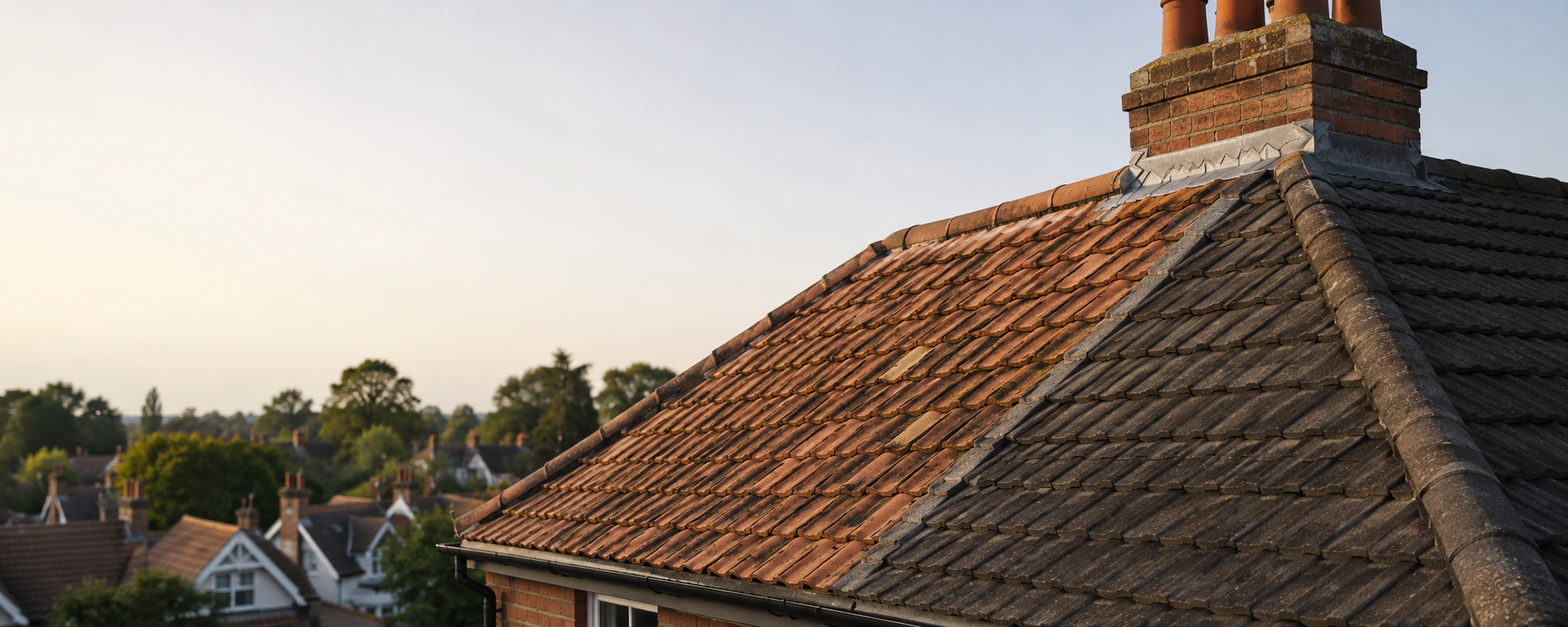
- Written by: admin
- July 15, 2026
- Categories: Uncategorized
Clay Tiles vs Concrete Tiles: Which Roofing Material Is Right for Your Home?
Quick Summary
- Clay tiles offer a traditional appearance, excellent colour retention, and a potential lifespan of 60 to 100 years when properly installed and maintained.
- Concrete tiles are generally more affordable, widely available, and suitable for many modern and traditional UK properties.
- Period, listed, and conservation-area properties may require roofing materials that closely match the original roof covering.
- Homeowners planning a full replacement can explore professional roof installation in Surbiton for advice based on their property type and roof structure.
- The new roof installation cost calculator can help homeowners understand the factors that may affect their overall project budget.
- The complete guide to roof replacement in Surrey explains the wider replacement process, including inspections, materials, access, and installation considerations.
Choosing the right roof is one of the biggest decisions you will make for your home. Your roof protects your property from rain, wind, and changing weather, but it also plays a big part in how your home looks and how much maintenance it needs in the future.
If you are comparing clay tiles vs concrete tiles UK, you are not alone. Many homeowners in Surbiton, Kingston upon Thames, and South West London ask this question when planning a new roof or replacing an old one. This is especially common for owners of Victorian, Edwardian, and 1930s homes, where the roofing material can affect both the appearance and value of the property.
In fact, your roof can make up around 30 percent of your home’s external appearance. That is why choosing the right roof tiles is about more than just cost. You also need to think about durability, maintenance, and how well the tiles suit your home.
In this guide, we will compare clay roof tiles vs concrete roof tiles in simple terms. You will learn about the benefits, the differences, and which option may be the best fit for your property.
Not Sure Whether Clay or Concrete Roof Tiles Are Right for Your Home?
Every property is different. Whether you own a Victorian home, a 1930s semi-detached house, or a modern property, Maple Roofing Ltd can assess your roof, explain the benefits of clay and concrete tiles, and recommend the most suitable option for your budget, roof structure, and local planning requirements. We proudly serve homeowners across Surrey and South West London.
Quick Answer
Clay roof tiles are usually the better choice for period properties, long-term colour retention, and maximum lifespan. Concrete roof tiles are generally more suitable for homeowners who want a dependable roof with a lower initial cost.
Did You Know?
Did you know that roof alterations, including re-roofing, may fall under permitted development in England only when specific limits and conditions are met? The Planning Portal’s official roof guidance explains the rules and recommends checking whether any local restrictions apply before work begins.
What Are Clay Roof Tiles?
Clay roof tiles have been used on homes for hundreds of years. They are made from natural clay, which is shaped and then fired at very high temperatures. This process creates strong and durable roof tiles that can last for many decades.
You will often see clay roof tiles on Victorian, Edwardian, and other traditional homes across Surrey and South West London. They have a classic appearance that suits older properties and helps preserve their original character.
Clay tiles are available in different styles, including:
- Plain tiles
- Pantiles
- Roman tiles
Another advantage is that clay tiles are naturally breathable. This means they allow small amounts of moisture to escape from the roof structure, helping to reduce the risk of trapped damp.
Benefits of Clay Roof Tiles
Feature | Benefit |
Natural material | Gives your roof a traditional and timeless appearance |
Long lifespan | Can last for 60 to 100 years with proper care |
Colour retention | The natural colour stays attractive for many years |
Weather resistance | Performs well in the UK’s changing weather |
Ideal for period homes | Matches the style of many older properties |
When looking at clay roof tiles pros and cons UK, the biggest advantages are their long lifespan, attractive appearance, and suitability for traditional homes.
What Are Concrete Roof Tiles?
Concrete roof tiles became popular across the UK during the twentieth century. They are made using a mixture of cement, sand, water, and colour pigments. The mixture is poured into moulds and left to harden before being used on roofs.
Today, concrete roof tiles are one of the most common roofing materials in the UK. They come in many different colours and profiles, making them suitable for both modern and traditional homes.
Many homeowners choose concrete tiles because they offer good performance at a lower purchase price than clay tiles.
Benefits of Concrete Roof Tiles
Feature | Benefit |
Lower upfront cost | Usually more affordable than clay tiles |
Variety of styles | Available in many colours and designs |
Strong and reliable | Suitable for everyday UK weather |
Easy to source | Widely available across the UK |
Suitable for modern homes | Complements a wide range of property styles |
If you are researching concrete roof tiles pros and cons, one of the biggest benefits is their affordability while still providing dependable protection for your home.
Clay vs Concrete Tiles: Side by Side Comparison
Both clay and concrete roof tiles are reliable roofing materials. The right choice depends on your budget, the style of your home, and how long you want your roof to last.
The table below highlights the main differences.
Feature | Clay Roof Tiles | Concrete Roof Tiles |
Lifespan | Around 60 to 100 years | Around 30 to 50 years |
Initial cost | Higher | Lower |
Weight | Lighter | Heavier |
Colour retention | Excellent | May fade over time |
Breathability | High | Moderate |
Frost resistance | Excellent | Good |
Suitable for period homes | Yes | Sometimes, depending on the property |
Environmental impact | Made from natural clay | Made using cement |
When comparing clay roof tiles vs concrete roof tiles, there is no single answer that suits every home. Clay tiles are known for their traditional appearance and long lifespan, while concrete tiles are a practical choice for homeowners looking for a more affordable roofing solution.
Which Lasts Longer: Clay or Concrete Roof Tiles?
If you are looking for a roof that can last for many decades, clay roof tiles usually come out on top.
A well installed clay roof can last between 60 and 100 years. In some cases, it can last even longer with regular maintenance.
Concrete roof tiles also offer good durability, but they generally last between 30 and 50 years. While this is still a long time, they may show signs of ageing sooner than clay tiles.
The UK’s weather also plays an important role. During winter, water can enter tiny spaces in roof tiles. When temperatures fall below freezing, the water expands as it turns to ice. This is known as the freeze thaw cycle. Over many years, this process can slowly wear down roofing materials.
Good quality clay roof tiles that meet BS EN 1304, the British and European product standard for clay roofing tiles, are tested to cope with these weather conditions, helping them perform well in the UK’s climate.
If you are asking which roof tiles are best UK, the answer depends on your priorities. If you want the longest lifespan and a traditional appearance, clay tiles are often the preferred choice. If keeping costs lower is your main goal, concrete tiles can offer excellent value.
Cost Comparison: Clay Tiles vs Concrete Tiles in the UK
Cost is often one of the first things homeowners consider when choosing a new roof.
Clay roof tiles usually cost more to buy than concrete roof tiles. Installation costs can also be higher, depending on the type of roof and the complexity of the project.
Concrete roof tiles are generally more affordable, making them a popular option for homeowners working within a budget.
However, the total cost of a roofing project depends on more than just the tiles themselves. Other factors include:
- The size of your roof
- Labour costs
- Scaffolding
- Removing old roofing materials
- Roof access
- Any repairs needed before installation
Although clay tiles have a higher upfront cost, their longer lifespan may make them a better long term investment. Concrete tiles cost less at the beginning and still provide reliable protection, making them a great option for many UK homes.
Which Tile Is Best for Period and Listed Properties in Surrey?
If you own a period property, choosing the right roof tiles is especially important. Your roof should not only protect your home but also match its original character.
Many Victorian, Edwardian, and 1930s homes in Surbiton, Kingston upon Thames, and across Surrey were originally built with clay roof tiles. Replacing them with a different material can sometimes change the appearance of the property.
This is why many homeowners compare clay roof tiles vs concrete roof tiles before making a decision.
If your property is in a conservation area or is a listed building, there may be rules about the type of roof tiles you can use. In many cases, planning authorities prefer replacement tiles to match the original roofing material. For some listed properties, using clay roof tiles may even be a requirement.
The table below provides a simple guide.
Property Type | Most Suitable Roof Tile |
Victorian homes | Usually clay roof tiles |
Edwardian homes | Usually clay roof tiles |
1930s semi detached homes | Often clay roof tiles, depending on the original roof |
Modern homes | Clay or concrete roof tiles |
Listed buildings | Usually the original roofing material or a close match |
If you are unsure which roof tiles are suitable for your home, it is always best to speak with an experienced roofing contractor before starting any work.
For many traditional homes, comparing clay vs concrete roof tiles Surrey is about more than cost. It is also about protecting the character and value of the property.
Environmental Considerations
Many homeowners now think about the environmental impact of the materials they choose for their home.
Clay roof tiles are made from natural clay and can last for many decades. Because they have such a long lifespan, they do not need replacing as often. This can help reduce waste over time.
Concrete roof tiles are also durable, but they are made using cement. Cement production generally creates more carbon emissions than clay production.
At the end of their lifespan, both clay and concrete roof tiles can often be recycled, depending on local recycling facilities.
Here is a simple comparison.
Environmental Factor | Clay Roof Tiles | Concrete Roof Tiles |
Natural material | Yes | No |
Long lifespan | Yes | Good, but generally shorter |
Carbon footprint | Lower over the full lifespan | Higher because of cement production |
Recycling | Often recyclable | Often recyclable |
If sustainability is important to you, clay roof tiles are often seen as the more environmentally friendly choice because they last longer and are made from natural materials.
Questions to Ask Before Choosing Roof Tiles
Before selecting clay or concrete roof tiles, ask your roofing contractor the following practical questions:
- Can the existing roof structure safely support the weight of the proposed tiles?
- Does the selected tile match the pitch, shape, and architectural style of the property?
- Will the replacement material meet any local conservation or listed-building requirements?
- What labour, scaffolding, removal, and preparation work will be included in the quotation?
- How does the complete quotation compare with the typical factors discussed in the guide to how much a new roof costs in Surbiton?
Which Tile Should You Choose?
Both clay and concrete roof tiles are reliable choices for homes across Surrey and South West London. The best option depends on your budget, the style of your property, and how long you want your roof to last.
If you own a period home or want a roof with a very long lifespan, clay roof tiles are often the preferred choice. If you are looking for a cost effective solution that still offers excellent protection, concrete roof tiles are a great option.
When comparing clay tiles vs concrete tiles UK, it is important to look beyond the initial cost. Think about durability, maintenance, appearance, and any planning requirements before making your final decision.
If you would like expert advice tailored to your property, the team at Maple Roofing is here to help. We can assess your roof, explain your options in simple terms, and recommend the best solution for your home.
Frequently Asked Questions
Are clay roof tiles more expensive than concrete roof tiles?
Yes. Clay roof tiles usually cost more than concrete roof tiles. However, they can last much longer, which may offer better value over time.
Do I need planning permission to change my roof tiles?
In many cases, no. However, if your property is listed or located within a conservation area, you may need permission before changing the roofing material. It is always worth checking with your local planning authority first.
Can I mix clay and concrete roof tiles?
It is generally not recommended. Clay and concrete roof tiles can differ in size, weight, and appearance. Using both on the same roof may affect its performance and overall look.
How long do concrete roof tiles last in the UK?
Concrete roof tiles usually last between 30 and 50 years. Their lifespan depends on the quality of the tiles, how well they are installed, and the level of maintenance they receive.
Which roof tiles are best UK?
The right choice depends on your property and your priorities. If you want a traditional appearance and the longest possible lifespan, clay roof tiles are often the better option. If you are looking for a more affordable roofing solution, concrete roof tiles can provide excellent value.