

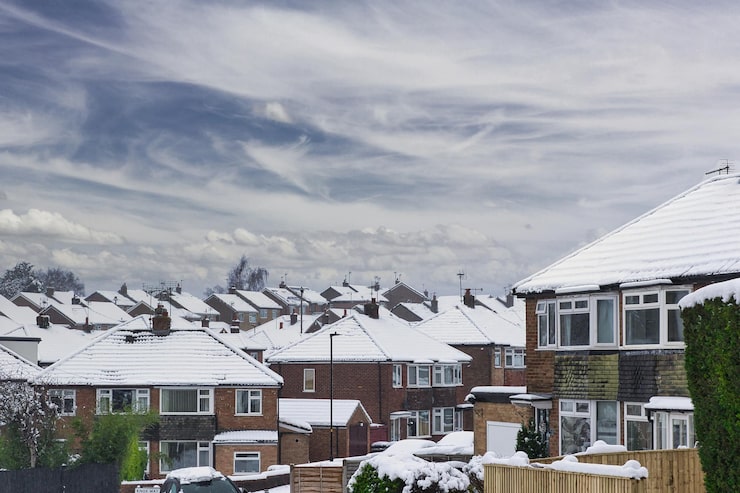
How UK Weather Affects Your Roof's Lifespan (Wind, Rain and Frost Cycles)
[Quick Summary]
- Rain rarely causes sudden failure, but constant damp shortens the working life of every roofing material through moss growth, timber decay and slow water ingress.
- Wind damage is structural and immediate, loosening tiles, slates and flashing, particularly on exposed or riverside properties.
- Frost causes the most underestimated damage: water trapped in tiny cracks expands as it freezes, widening those cracks with every cycle.
- Roofs on Victorian and Edwardian homes across Kingston, Twickenham and Wimbledon face a specific mix of ageing materials and repeated freeze-thaw stress.
- Two annual inspections, in autumn and after winter, catch most weather-related damage before it becomes a leak.
Not Sure How Well Your Roof Is Coping With the Weather?
Wind, rain and frost rarely cause a dramatic failure on their own, they wear a roof down cycle after cycle until a small weakness becomes a leak. If your roof has been through a recent storm, a hard frost, or simply hasn't been checked in a few years, our experienced roofers can spot early signs of weather damage before they turn into costly repairs. We provide honest advice, professional inspections, and reliable roofing services across Surbiton, Surrey, and South West London.
Why Weather Is the Biggest Factor in Roof Lifespan
A roof’s warranty tells you how long it should last. British weather decides how long it actually does.
Every roof in the UK faces the same three-part cycle: rain that soaks into materials, wind that tests every fixing, and frost that freezes and thaws inside cracks nobody has noticed yet. None of these forces work alone. A tile weakened by frost is far more likely to lift in the next gale. A gutter clogged after a windy autumn sends rainwater somewhere it was never meant to go. Over years, this combination is what turns a 50-year roof into a 30-year roof, or a well-maintained one into a genuine 60-year asset.
Did You Know ?
UK frost patterns have altered more than most homeowners know. Air and ground frosts have been steadily decreasing since the 1980s, with more than two weeks less air frost in the last decade than the average for 1931 to 1990, according to the Met Office’s State of the UK Climate report. Less frost is good news for roofs, but it’s not that simple. Short periods of freeze-thaw cycling are more common, and they can place more stress on ageing tiles and mortar than a long, steady winter chill, followed by a rapid thaw.
Rain: The Slow, Constant Threat
Rain is the weather element homeowners worry about least and should probably worry about most. It rarely causes a dramatic failure. Instead, it works gradually, and that is exactly what makes it dangerous.
Moss and algae growth. Persistent damp, especially on north-facing pitches that stay shaded for most of the day, creates ideal conditions for moss. Moss holds moisture against the tile surface long after the rest of the roof has dried, accelerating erosion of the tile and, on older concrete tiles, washing away the protective coating faster than it would weather on its own.
Saturated felt and underlay. Roofing felt beneath tiles and slates is designed to handle occasional moisture, not sustained saturation. Years of repeated wetting break down its flexibility, and once it starts to perish, water finds its way through even when the tiles above look fine.
Gutter and drainage strain. The UK sees rain on a large share of days each year, and a blocked or undersized gutter system turns that regular rainfall into standing water at the roofline. Standing water finds the weakest point in a roof covering far faster than falling rain does, which is why gutter maintenance sits near the top of every roofer’s list of low-cost, high-value jobs.
Timber decay. Where rainwater does get past the covering, whether through a cracked tile, a failed seal around a chimney, or worn flashing, it reaches the timber structure underneath. Wet rot in rafters and battens is one of the more expensive weather-related repairs precisely because it stays hidden until the damage is advanced.
Wind: The Sudden, Structural Threat
Where rain wears a roof down, wind attacks it directly. UK storms bring sustained gusts that put real uplift pressure on every tile, slate and ridge fixing, and the damage often shows up the moment the weather clears.
Lifted and displaced tiles. Wind does not need to be a named storm to cause damage. Repeated moderate gusts gradually loosen nails and clips, and it only takes one strong gust to finish the job. This is especially common on roofs where the original fixing specification did not account for how exposed the property is.
Ridge and hip mortar failure. Older bedded mortar at ridges and hips is one of the first things to fail in high wind, because mortar is rigid while the roof structure below it flexes slightly in strong gusts. Once a ridge tile shifts, the exposed gap lets both wind and rain into the roof space.
Flashing displacement. Lead and metal flashing around chimneys, dormers and roof valleys relies on a tight mechanical seal. Wind-driven rain finds the smallest gap, and a flashing seal that has lifted even a few millimetres can let in a surprising amount of water during a single storm.
Exposure matters more than most homeowners think. Riverside and elevated properties, common across parts of Twickenham and the wider Thames-side stretch of Surrey, take noticeably more wind load than a sheltered terrace a few streets back. Two identical roofs installed on the same day can age very differently based on exposure alone.
Frost Cycles: The Hidden Damage You Can’t See
Frost damage is the one homeowners are least likely to notice happening, because it occurs inside the material itself, not on the surface.
The mechanism is straightforward. Roofing tiles, slates and mortar are porous to some degree. Rainwater seeps into tiny existing cracks or pores. When the temperature drops below freezing, that trapped water expands by roughly nine percent as it turns to ice, and that expansion pushes outward on the surrounding material. The crack widens slightly. The next time it rains and freezes, more water gets in, and the cycle repeats.
This is why frost damage tends to appear in roofs that are already a decade or two old rather than brand new ones. It is cumulative. A roof that has been through twenty winters of freeze-thaw cycles has effectively been stress-tested twenty times over, whether or not it shows any obvious signs.
Concrete tiles are particularly vulnerable once their protective surface coating has worn away, because the exposed aggregate underneath is more porous. Natural slate and well-fired clay tiles resist frost far better, which is part of why they carry longer expected lifespans, but even these materials are not immune where poor original installation has left water pooling rather than draining away.
Mortar at ridges, hips and chimney flaunching is often the first casualty of a hard freeze-thaw winter, since traditional sand and cement mortar is more porous than the tiles it holds in place.
How Different Roofing Materials Handle UK Weather
Not every roof covering responds to wind, rain and frost the same way. For a full breakdown of expected lifespans by material, see our guide on how long a roof lasts, but the short version for weather resistance specifically looks like this:
Material | Rain resistance | Wind resistance | Frost resistance |
|---|---|---|---|
Welsh slate | Excellent | Very good with correct fixing | Excellent |
Clay tiles | Good | Good | Good, if well-fired |
Concrete tiles | Good when coating is intact | Good | Moderate once coating wears |
EPDM flat roofing | Excellent | Very good | Excellent, flexible in cold |
Felt (older bitumen) | Fair, degrades with UV and age | Fair | Poor once brittle |
The pattern is consistent: materials that resist water absorption also tend to resist frost, since frost damage is really a rain problem that happens to occur below freezing.
Signs Your Roof Has Weather Damage
A few checks after any period of severe weather can catch problems while they are still cheap to fix.
- Tiles or slates that look chipped, cracked, or slightly out of alignment compared with their neighbours
- Granules collecting in gutters or at the base of downpipes, a sign of surface erosion
- Damp patches, discolouration or a musty smell in the loft space
- Sagging sections of roofline, which can indicate saturated or rotting timber underneath
- Moss or algae concentrated in one area rather than spread evenly
- Daylight visible through the roof deck from inside the loft
- A noticeable rise in energy bills, which can point to reduced loft insulation performance from trapped moisture
Pro Tips: Protecting Your Roof Through the Seasons
- Clear gutters twice a year, ideally in late autumn once most leaves have dropped and again in early spring, to stop rainwater backing up under the roof covering.
- Check ridge and hip mortar every couple of years, since this is usually the first place a freeze-thaw winter shows its effects.
- Trim overhanging branches that keep sections of the roof shaded and damp for longer than necessary, which encourages moss growth.
- Book a post-storm check after any named storm or unusually strong gusts, rather than waiting for a leak to appear.
- Keep loft ventilation clear, since trapped moisture from condensation adds to the damp load a roof structure has to cope with, on top of what comes from outside.
An Expert’s View After 20+ Years on Surrey Roofs
Having worked on roofs across Surrey and South West London for more than two decades, the pattern is consistent: the roofs that last longest are rarely the most expensive ones, they are the ones that get looked at regularly. A ten-minute gutter check after a windy week catches problems while they are still a small job. Left for a year or two, the same problem is usually a much bigger one, because rain, wind and frost do not take turns, they compound each other.
When to Call a Professional
Some checks are safe to do from ground level with a pair of binoculars, such as scanning for obviously displaced tiles or sagging ridgelines. Anything involving getting onto the roof itself, inspecting flashing up close, or investigating a suspected leak at its source, is worth leaving to a qualified roofer. Maple Roofing Ltd carries out free, no-obligation roof surveys across Surrey and South West London, including Kingston upon Thames, Twickenham and Wimbledon, and can flag weather-related wear before it turns into a leak.
For homeowners planning ahead of winter or following a recent storm, an inspection is the simplest way to understand exactly where a roof stands. Get in touch to arrange a survey.
FAQs
- Does rain alone damage a roof, or does it need to combine with other weather? Rain on its own causes gradual wear through moss growth and saturation of underlay, but the most serious damage usually happens when rain combines with frost or wind. Water that gets in during rain is what freezes and expands during the next cold snap.
- How much wind speed does it take to damage a UK roof? Older or poorly maintained roofs can suffer tile displacement in gusts well below storm force, particularly at ridges and hips where mortar has already begun to weaken. A well-installed, well-maintained roof can withstand considerably stronger gusts before showing any damage.
- Why does frost damage roofs that look completely fine on the surface? Frost damage starts inside tiny existing pores and hairline cracks that are not visible from the ground. The expansion of freezing water widens these over many cycles, so the damage is cumulative and often invisible until a tile eventually fails.
- Are older Victorian and Edwardian roofs in Surrey more vulnerable to weather damage? Age itself is less important than condition. A well-maintained period roof can outperform a newer one that has been neglected. That said, older roofing materials and mortar mixes tend to be more porous than modern equivalents, which can make regular inspection more important on period properties.
- How often should a roof be inspected because of weather? Twice a year is a reasonable baseline, once in autumn before winter sets in and once in spring after the coldest months. An additional check after any severe storm or unusually hard frost is worth adding to that schedule.
- Can gutter maintenance really extend a roof’s lifespan? Yes. Blocked gutters cause water to back up under the lowest course of tiles or overflow down the fascia, both of which introduce moisture the roof design never accounted for. Clear gutters are one of the cheapest ways to protect a roof’s working life.
- Which roofing material copes best with UK weather overall? Natural slate and EPDM rubber flat roofing tend to perform best across rain, wind and frost combined, thanks to low water absorption and flexibility in cold temperatures. The right choice still depends on the roof’s pitch, the property’s style, and budget.