

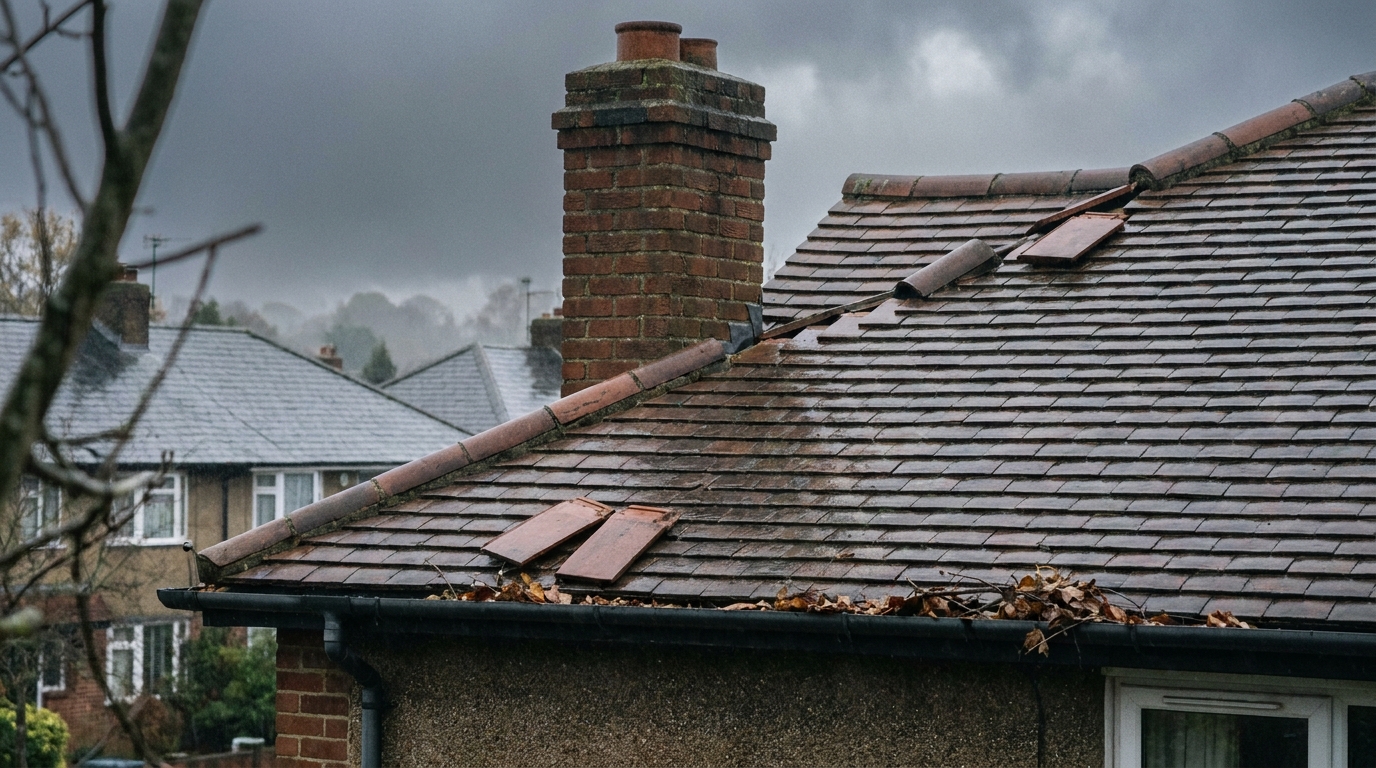
Does Home Insurance Cover Roof Damage in the UK? What's Actually Included?
What’s Usually NOT Covered?
This is where many homeowners get confused.
Home insurance is generally designed to cover sudden and unexpected events. It is not a maintenance contract for your home. The ABI states that general wear and tear and damage caused by a lack of maintenance are not usually covered.
For example, an insurer may not cover:
- Old roof tiles that have gradually deteriorated
- Damage caused by years of neglect
- A roof that has reached the end of its normal lifespan
- Long term leaks that were not repaired
- Damage caused by poor maintenance
- Existing problems that were present before the insured event
Imagine that a storm hits your home and a roof tile falls off. If the tile was in good condition before the storm, the sudden damage may be covered under your policy.
But if the tile was already cracked, loose, or badly worn, the insurer may decide that the storm did not cause the original problem. The storm may simply have made an existing issue worse.
This is one reason why wear and tear roof insurance exclusion is important to understand before making a claim.
Keeping your roof in reasonable condition can also help. The ABI recommends checking for loose or damaged tiles, securing flashing and pointing, clearing gutters, and looking for signs such as damp patches or damaged underlay.
Buildings Insurance vs Contents Insurance: Which Covers the Roof?
The type of insurance you have also matters.
Buildings insurance generally covers the structure of your home, one of the two main parts of a standard home insurance policy. This can include the roof, walls, floors, windows, and other permanent parts of the building.
Contents insurance is different. It covers your belongings inside the property, such as furniture, clothing, electronics, and other personal items, depending on the policy.
So if a storm damages your roof, the roof itself would generally fall under buildings insurance rather than contents insurance.
If rain then damages your furniture or other belongings inside the house, those items may fall under contents insurance, depending on the cause of the damage and the terms of your policy.
Type of Insurance | What It Generally Covers |
|---|---|
Buildings insurance | The structure of the home, including the roof |
Contents insurance | Personal belongings inside the home |
Buildings and contents insurance | Both the structure and belongings, subject to the policy |
If you rent your home, the landlord will normally be responsible for insuring the building. Your own contents insurance would generally be for your personal belongings.
This distinction is useful when looking at buildings insurance roof cover because the roof is part of the building itself.
Does Roof Type or Age Affect Your Cover?
The type and age of your roof can matter when you take out insurance or make a claim.
For example, flat roofs may have different conditions attached to them because they can have a different lifespan and maintenance needs compared with pitched roofs. Some policies may also ask specific questions about the age or type of your roof.
That does not automatically mean that a flat roof is not covered.
The same applies to older roofs. A Victorian or Edwardian home in Kingston upon Thames, Surbiton, or another part of South West London may have an older roof that needs more regular maintenance. The age of the roof does not automatically mean that insurance will not cover sudden damage.
However, insurers may consider whether the roof was already in poor condition before the event.
That is why it is important to answer questions about your property honestly when arranging insurance and to check your policy for any conditions that apply to your roof.
The ABI also notes that insurers can consider the existing condition of a property when looking at storm damage.
How to Tell If Your Damage Is Likely Covered
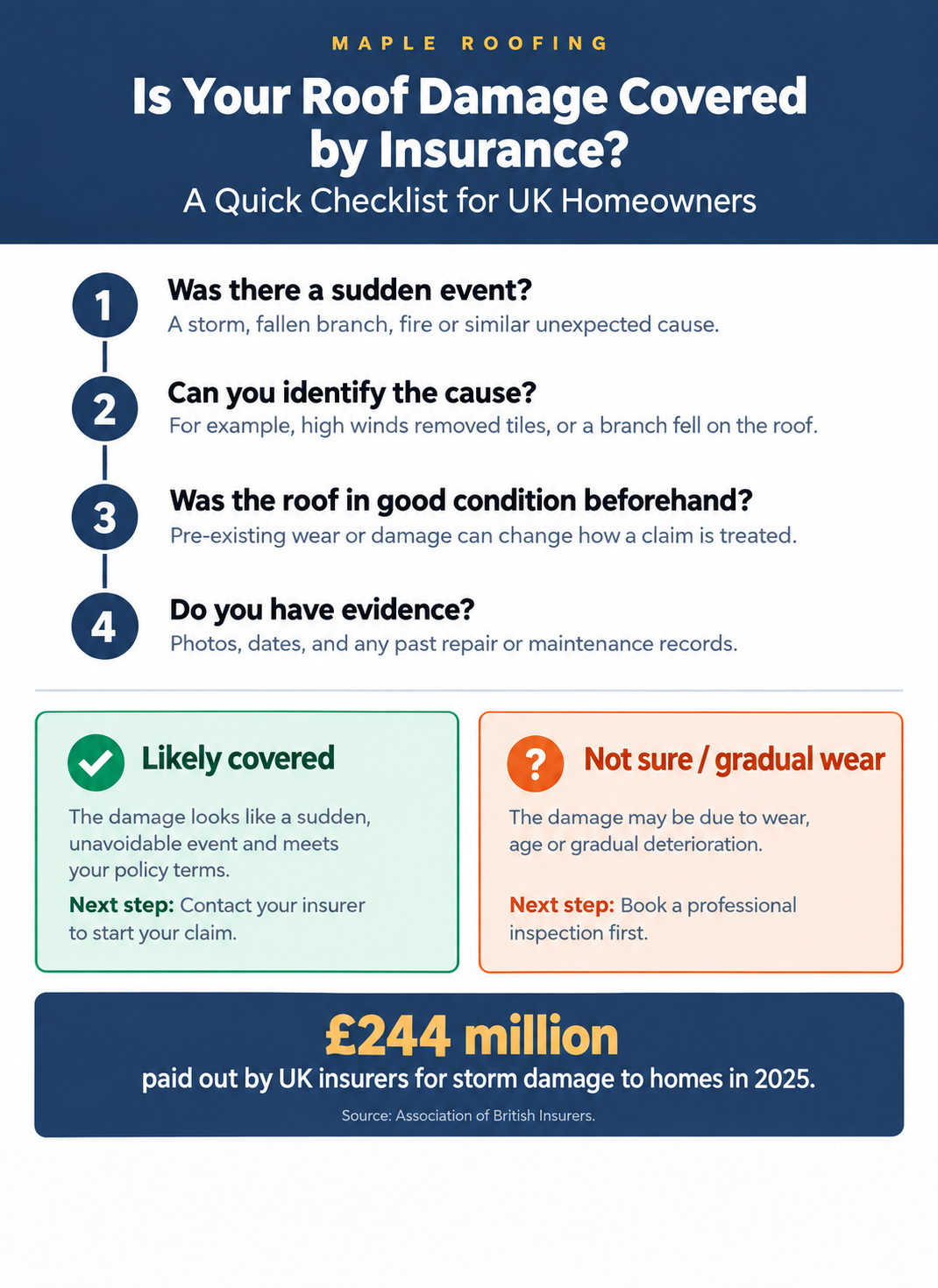
If your roof has been damaged, start by looking at what happened rather than assuming that the damage is covered.
Ask yourself a few simple questions:
1. Was there a sudden event?
Did a storm, falling tree, fire, or another unexpected event cause the damage?
If yes, there may be a reason to contact your insurer.
2. Can you identify what caused the damage?
For example, did strong winds remove roof tiles? Did a fallen branch damage the roof?
Being able to explain what happened can help when you contact your insurer.
3. Was the roof in good condition beforehand?
This can be important. If the roof already had cracked tiles, damaged flashing, or long term leaks, the insurer may consider these existing problems rather than sudden storm damage.
4. Do you have evidence?
Take photographs where it is safe to do so. Keep any relevant documents and records of previous repairs.
If you are unsure about the condition of your roof, a professional inspection can help identify what has happened.
The ABI recommends contacting your insurer as soon as reasonably possible after storm damage and keeping photographs and records of emergency work or expenses.
What to Do in the First 48 Hours After Storm Damage
The steps you take immediately after a storm can shape how straightforward your claim becomes. The aim is to protect the property from further damage while keeping a clear record of what happened.
- Make the property safe first. Stay off the roof, keep people away from fallen tiles or loose materials, and use a torch rather than climbing into the loft if water is coming through near lighting or wiring.
- Photograph everything before you tidy up. Take wide shots of the property and close shots of the damage, including any tiles or debris that have landed in the garden.
- Contact your insurer early. Most insurers run a 24 hour claims line and will explain what they need from you before any repair work begins.
- Arrange temporary protection rather than a full repair. A tarpaulin or emergency cover limits water entry, and insurers generally expect you to take reasonable steps to prevent further damage while the claim is assessed.
- Keep every receipt. Emergency call out charges, materials, and temporary accommodation costs are often part of the claim, so hold on to the paperwork.
- Understand the likely scale of the work. Looking at typical roof repair costs in Surrey gives you a useful reference point when the insurer or loss adjuster discusses a settlement figure.
Be cautious about doorstep offers after severe weather. Permanent repairs carried out before the insurer has assessed the damage can make a claim harder to evidence.
Why a Written Roof Inspection Report Matters
When you make a roof insurance claim, your insurer may need evidence showing what happened and what condition the roof was in.
A professional inspection can provide useful information about the visible damage. It can also help separate sudden damage from older problems that may have developed over time.
For example, an inspection might identify:
- Broken or missing roof tiles
- Damaged flashing
- Water entry
- Problems with the roof underlay
- Existing wear and deterioration
- Damage caused by a recent weather event
A roof inspection report for insurance can then give you a clear written record of the findings.
It is important to remember that a roofer does not decide whether your insurance claim will be accepted. That decision belongs to your insurer and depends on your policy.
Maple Roofing provides detailed roof inspection reports for insurance purposes. Their report includes a written assessment and photographs, and they can liaise directly with the insurance company where required. Their website currently states that these insurance reports are available from £95 plus VAT.
This can be useful if your insurer needs professional evidence about the condition and damage to your roof.
Does Home Insurance Cover Roof Damage in the UK? The Bottom Line
The key difference is usually between sudden damage and gradual damage.
If a storm suddenly damages a roof that was otherwise well maintained, there may be cover under your buildings insurance. If the problem has developed through age, wear and tear, poor maintenance, or an existing defect, it is much less likely to be covered.
If you are in Surrey or South West London and your roof has suffered damage, the first step is to check your policy and contact your insurer. Take photographs if it is safe to do so, and keep records of any work carried out.
If you need professional evidence about the condition of your roof, Maple Roofing can provide a detailed roof inspection report for insurance purposes, including photographs and a written assessment. The team can also liaise with your insurer where required.
Explore the full range of roofing services from Maple Roofing, or contact Maple Roofing to arrange a professional roof inspection and get a clear assessment of what may have happened to your roof.
Frequently Asked Questions
Is a leaking roof covered by home insurance?
It depends on what caused the leak. A sudden leak caused by an insured event, such as storm damage, may be covered. A leak caused by long term wear, poor maintenance, or an old roof may not be covered. Always check your policy and speak to your insurer.
Does home insurance cover a roof replacement due to age?
Usually, insurance is not intended to pay for replacing a roof simply because it has become old or worn out. Home insurance generally covers sudden and unexpected damage rather than normal ageing, so it helps to know how long a roof should last for your particular type of covering. If a professional inspection confirms the roof does need replacing, our roof installation service page covers what a full replacement involves.
What if my claim gets rejected?
If your roof insurance claim rejected notice arrives, read the explanation carefully and check the relevant section of your policy. If you believe the decision does not reflect the damage or the circumstances, you can ask your insurer to explain its decision and follow its complaints process.
How much roof damage do I need for a claim?
There is no single amount of damage that automatically qualifies for a claim. What matters is whether the damage was caused by an event covered by your policy and whether any relevant conditions or exclusions apply.
Does insurance cover flat roof damage?
A flat roof can be covered under buildings insurance, but the exact terms depend on your policy. Some policies may have specific conditions relating to flat roofs, their age, or their construction, so check your policy before assuming that damage is covered.